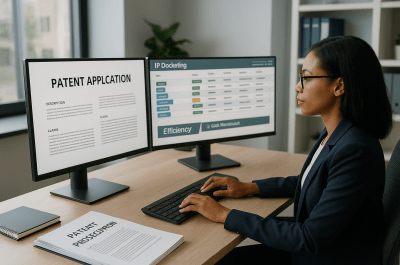
Patent Prosecution Workflow Support: Introduction: Challenges in Patent Prosecution for Growing Law Firms
As law firms expand their intellectual property practices, managing the complexities of patent prosecution workflow becomes increasingly critical. Growing firms face heightened risks such as missed deadlines, docketing errors, and communication breakdowns between prosecution teams and clients. Effective workflow support strategies tailored to the scale and pace of growth are essential to maintain operational accuracy and client trust.
For authoritative filing basics, review the USPTO patent basics guide when mapping portfolio software to your patent workflow.
Understanding Patent Prosecution Workflow: Key Components
First, Patent prosecution workflow encompasses the end-to-end process of managing patent applications from filing through office action responses and final disposition. Core components include:
- Deadline tracking: Monitoring USPTO deadlines and client-specific milestones.
- Docketing: Accurate entry and updating of patent deadlines in docketing systems.
- Document management: Organizing and retrieving prosecution correspondence and filings.
- Team coordination: Ensuring seamless communication among attorneys, paralegals, and clients.
- Quality assurance: Regular audits to prevent errors and omissions.
Next, Each step requires precision and timely execution to avoid costly missed deadlines and maintain prosecution momentum.
Common Workflow Bottlenecks and Risks in Growing Firms
Growth often introduces challenges such as:
- Increased volume: More applications increase docketing complexity and potential for oversight.
- Resource strain: Limited staffing or inexperienced paralegals may struggle to keep pace.
- Process inconsistency: Ad hoc or manual workflows lead to errors and inefficiencies.
- Communication gaps: Lack of standardized updates between internal teams and clients.
For example, Addressing these bottlenecks requires scalable, standardized workflows supported by technology and trained personnel.
Effective Docketing Systems and Their Role in Workflow Support
Also, Docketing systems serve as the backbone for patent prosecution workflow management. Key features to support growing teams include:
- Automated deadline calculations: Eliminates manual entry errors by adhering to USPTO rules.
- Customizable alerts and reminders: Supports tiered notifications to attorneys and paralegals.
- Document integration: Links correspondence and filings directly to docket entries.
- Audit trails: Tracks edits and user actions to ensure accountability.
- Reporting capabilities: Provides insight into workload, deadlines, and potential risks.
Meanwhile, Choosing and optimizing docketing software tailored to firm size and IP workflow complexity is a foundational step toward error reduction and operational efficiency. Related reading: IP docketing best practices
Integrating Outsourced Prosecution Support Services
Outsourcing prosecution support functions can help growing law firms manage workload spikes and mitigate risks. Benefits include:
- Access to experienced docketing professionals specialized in IP deadlines.
- Scalable support that adjusts with firm growth.
- Reduction in training overhead for internal staff.
- Enhanced quality control with double-check processes.
In addition, Careful vendor selection and integration with internal systems ensure seamless workflow continuity. Related reading: outsourced docketing support
Best Practices for Missed-Deadline Prevention
However, Preventing missed deadlines is paramount. Implementing the following best practices enhances reliability:
| Practice | Description |
|---|---|
| Redundant deadline checks | Multiple team members verify upcoming deadlines independently. |
| Regular docket audits | Scheduled reviews of docket entries and upcoming deadlines. |
| Automated alerts | Configuring system notifications well in advance of due dates. |
| Standardized procedures | Clear step-by-step workflows for docket entry and deadline management. |
| Training and documentation | Consistent training programs and accessible reference materials for staff. |
Adhering to these strategies significantly reduces the risk of oversight. Related reading: missed deadline prevention strategies
Leveraging Technology to Streamline Patent Prosecution Workflow
Technology integration beyond docketing systems can optimize workflows:
- Document management platforms enable centralized filing and access.
- Collaboration tools facilitate real-time communication among prosecution teams.
- Workflow automation reduces manual data entry and repetitive tasks.
- Analytics dashboards provide actionable insights into prosecution status and bottlenecks.
As a result, Investing in these solutions helps maintain accuracy and responsiveness as firm workloads expand. Related reading: patent prosecution technology solutions
Training and Scaling IP Paralegal Teams for Workflow Accuracy
At the same time, As firms grow, expanding and training IP paralegal teams is critical to sustain workflow integrity:
- Structured onboarding: Comprehensive training on docketing systems, USPTO rules, and firm procedures.
- Continuous education: Regular updates on changes in patent laws and technology tools.
- Clear role definitions: Assigning responsibilities to avoid duplication or gaps.
- Performance monitoring: Tracking accuracy and timeliness with feedback mechanisms.
Scaling IP paralegal operations thoughtfully supports consistent prosecution outcomes. Related reading: scaling IP paralegal operations
Conclusion
Finally, Growing law firms face unique challenges in managing patent prosecution workflows, but implementing robust docketing systems, leveraging outsourced support, enforcing missed deadline prevention best practices, and investing in technology and personnel training are proven strategies to maintain accuracy and efficiency. Partnering with experienced docketing and prosecution support providers, such as IP Docketers, can deliver scalable, expert assistance tailored to your firm’s growth trajectory.
Contact IP Docketers today to schedule a consultation and discover how our expert docketing and prosecution support services can help your growing law firm streamline workflows and safeguard deadlines.
This article is for informational purposes only and does not constitute legal advice.
Frequently Asked Questions
What is patent prosecution workflow support and why is it important for growing law firms?
First, Patent prosecution workflow support involves managing deadlines, docketing, document handling, and team coordination to ensure timely and accurate prosecution of patent applications. For growing firms, it is critical to prevent errors and missed deadlines as workloads increase.
How can law firms prevent missed deadlines in patent prosecution?
Next, Firms can prevent missed deadlines through redundant deadline checks, regular docket audits, automated alerts, standardized procedures, and comprehensive staff training.
What are the benefits of integrating outsourced prosecution support services?
For example, Outsourced services provide scalable, experienced docketing professionals that reduce training burdens, improve quality control, and help manage workload fluctuations effectively.
Which docketing system features best support growing patent prosecution teams?
Also, Features such as automated deadline calculations, customizable alerts, document integration, audit trails, and reporting capabilities best support growing teams.
How can IP paralegal teams contribute to more efficient prosecution workflows?
Meanwhile, Well-trained IP paralegals maintain docket accuracy, manage documents, coordinate communications, and execute standardized procedures that enhance workflow efficiency.
Practical Next Steps
In addition, Map every active docketing system, identify where deadlines are entered or reviewed, and confirm which team owns the final QA check before critical prosecution dates.
However, Teams should also review escalation paths, audit reporting, manual override controls, and system integrations so operational risk is reduced before the next deadline spike.
First, law firms should compare their highest-risk deadlines with current staffing coverage so the most sensitive prosecution dates receive the strongest review process.
Next, docketing managers should document which tasks are fully automated and which still depend on manual review or exception handling across systems.
For example, a team using multiple docketing platforms may need a single weekly reconciliation step so duplicate records and missing updates are found early.