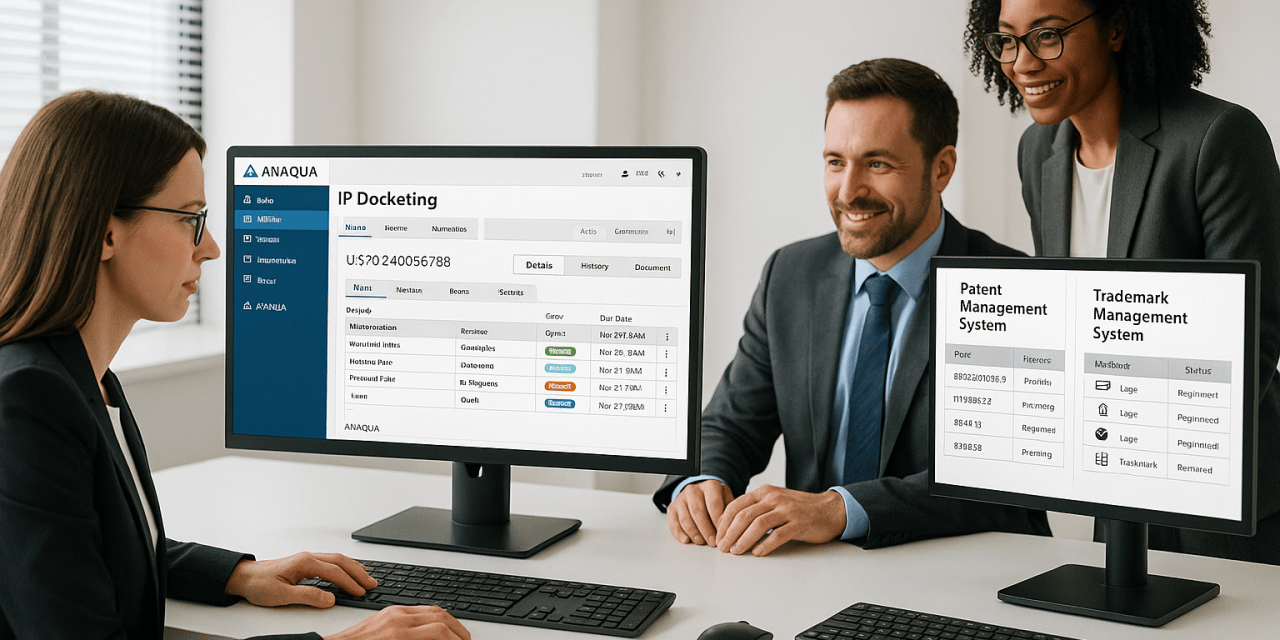
Why Anaqua Docketing Matters for Law Firms and IP Teams
Anaqua docketing is most valuable when it gives law firms and in-house IP teams tighter control over deadlines, cleaner portfolio visibility, and more reliable prosecution workflows. The platform is not just a place to store dates. It becomes operationally useful when teams connect it to their filing, reporting, document, and review processes so deadline ownership stays clear across attorneys, paralegals, and docketing staff.
For official filing and status information, teams should still cross-check time-sensitive records against USPTO Patent Center and, for trademark matters, the USPTO TSDR system.
If your team is reviewing broader workflow support, the IP docketing service model is a useful starting point for deciding how much process ownership should remain in house and how much can be supported by an external docketing partner.
What Strong Anaqua Integrations Should Actually Improve
The best Anaqua setup should improve more than software access. It should reduce operational friction in places where mistakes usually happen: deadline entry, instruction handoff, mailbox review, document retrieval, and final quality checks before due dates are released to the team.
- Deadline control: dates should flow consistently from source documents into the active docket without manual re-entry becoming a failure point.
- Workflow visibility: attorneys, prosecution staff, and docketing managers should be able to see who owns the next action and when escalation is required.
- Document access: correspondence, office actions, filing receipts, and client instructions should be easy to reach from the matter record.
- Reporting confidence: managers should be able to audit open actions, upcoming due dates, and stale records without relying on scattered spreadsheets.
Where Anaqua Fits Into a Practical Docketing Stack
Many IP teams use Anaqua as part of a wider systems environment rather than as a fully isolated tool. That usually means connecting it to document management workflows, reporting dashboards, email review habits, and internal review checkpoints. It is also helpful to compare integration expectations with other platform environments such as the AppColl integration workflow when you are mapping how your team wants alerts, documents, and status updates to move across systems.
On the content side, our article on building an efficient patent prosecution workflow explains why software alone is not enough unless the surrounding review process is disciplined and consistently monitored.
Common Anaqua Docketing Mistakes That Create Deadline Risk
Most deadline issues do not come from the platform itself. They usually come from inconsistent operating habits around the platform. Common examples include:
- Unclear ownership: the docket shows a date, but no one is clearly responsible for validation, escalation, or closure.
- Mailbox dependency: teams rely on inbox review without a documented fallback if correspondence is delayed, missed, or routed incorrectly.
- Weak QA checkpoints: there is no final review step for high-risk actions before dates are treated as confirmed.
- Incomplete integration rules: source systems feed some matter data correctly, but key fields or alerts still require manual handling.
- Poor reporting habits: exception reports exist, but nobody reviews them often enough to catch aging items early.
These issues are exactly why smart docketing operations matter. They are also closely related to the risk controls discussed in our guide on reducing IP risk through smart docketing systems.
Implementation Checkpoints for Law Firms and IP Operations Teams
Before calling an Anaqua integration successful, teams should confirm that the operating model around the platform is stable. A practical checklist includes:
- mapping every incoming source of deadline-sensitive correspondence
- documenting who validates each category of date
- defining escalation windows for short-fuse actions
- testing exception reports and overdue-action views
- reviewing how external counsel or support vendors hand off updates
- confirming that attorneys can see critical reminders without depending on a single person to relay them
For firms handling growing portfolios, these checkpoints often matter more than adding another dashboard. Good Anaqua docketing practice is really about repeatable workflow discipline supported by software, not software replacing discipline.
When Outsourced Docketing Support Makes Sense
Outsourced support is often useful when a team needs stronger date control but does not want every operational review task to remain with fee earners or overloaded internal staff. External support can help with docket review, data hygiene, cross-system reconciliation, report checks, and process consistency while your attorneys stay focused on strategic prosecution work.
That approach is especially helpful when a firm is scaling across patents and trademarks, migrating between tools, or trying to standardize service quality across multiple jurisdictions and client teams.
Frequently Asked Questions
What does Anaqua docketing help with most?
It helps teams manage deadlines, matter visibility, document access, and reporting across patent and trademark workflows, especially when the surrounding review process is clearly defined.
Can Anaqua integrations reduce missed deadlines by themselves?
No. They help a lot, but the real protection comes from combining the platform with clear ownership, escalation rules, and routine quality checks.
Who should review an Anaqua docketing workflow?
Docketing managers, IP paralegals, prosecution staff, and supervising attorneys should all be involved, because each group sees a different part of the operational risk.
Final Takeaway
Anaqua docketing works best when it is treated as the operational center of a disciplined IP workflow, not as a passive database of dates. Law firms and IP teams that connect the platform to clear review rules, better reporting habits, and reliable support processes are much more likely to reduce deadline risk and keep prosecution work moving cleanly.
If your team needs help improving integrations, reporting discipline, or day-to-day docket support, visit IP Docketers’ IP docketing services to see how a specialized support model can strengthen your workflow.