

Introduction to IP Paralegal Services in Docketing and Prosecution
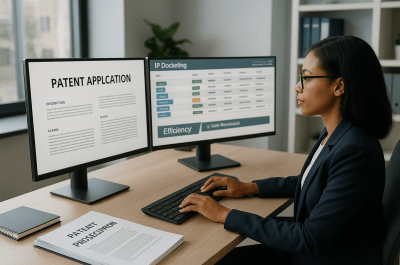
IP paralegal services play a vital role in the seamless operation of docketing and patent prosecution teams. These professionals ensure that intellectual property deadlines are met accurately and that prosecution workflows proceed without disruption. Whether supporting law firms or in-house IP departments, IP paralegals provide essential legal-support functions that enhance operational efficiency and mitigate the risk of missed deadlines.
For authoritative filing basics, review the USPTO patent basics guide when mapping portfolio software to your patent workflow.
Key Responsibilities of IP Paralegals in Docketing Teams
First, Docketing paralegal support involves meticulous tracking and entry of deadlines associated with patent and trademark filings. Core responsibilities include:
- Reviewing USPTO and foreign office communications to identify critical deadlines
- Entering and verifying docket entries within IP docketing systems
- Monitoring upcoming deadlines and coordinating with attorneys or agents for timely responses
- Maintaining accurate records for audits and compliance reviews
Next, For docketing managers, having dedicated paralegal support ensures that every deadline is accounted for and verified, reducing human error and improving overall docket integrity.
Supporting Patent Prosecution Teams: Paralegal Contributions
For example, Patent prosecution paralegals assist prosecution teams by managing procedural documentation, preparing filings, and coordinating communications with patent offices. Their contributions include:
- Drafting and organizing response documents for office actions
- Assisting with information disclosure statements and priority claims
- Scheduling meetings and calls with patent examiners
- Tracking prosecution milestones and alerting attorneys to upcoming deadlines
Also, In-house IP teams benefit from paralegal expertise that ensures adherence to prosecution timelines while allowing attorneys to focus on substantive legal analysis.
Best Practices for Integrating Paralegal Support into IP Workflows
Meanwhile, Effective integration of IP paralegal services requires clear communication, standardized procedures, and leveraging technology. Consider these best practices:
| Best Practice | Description | Example |
|---|---|---|
| Centralized Docketing System | Use a single, integrated docketing platform accessible to paralegals and attorneys. | Implementing IP Docketing System IntegrationsRelated reading: IP Docketing System Integrations to sync USPTO data automatically. |
| Regular Training and Updates | Keep paralegals updated on rule changes and procedural updates. | Monthly training sessions on USPTO fee schedule changes and new filing requirements. |
| Checklists and Review Protocols | Standardize review processes to catch errors before deadlines. | Use a checklist to verify docket entries and filing accuracy prior to submission. |
| Clear Communication Channels | Maintain open lines between paralegals, attorneys, and docketing managers. | Daily standups or centralized messaging platforms for status updates. |
Benefits of Outsourcing IP Paralegal Services for Law Firms and In-House Teams
In addition, Outsourcing IP docketing services and paralegal support can provide significant advantages:
- Access to experienced professionals specialized in IP law
- Scalable support to manage fluctuating workloads
- Improved accuracy and reduced risk of missed deadlines through dedicated focus
- Cost efficiencies compared to maintaining full in-house teams
However, Outsourced teams often utilize advanced technology and established quality control to complement internal resources effectively. Explore Outsourced IP Docketing Support for more information.
Technology and Tools Enhancing Paralegal Efficiency in IP Operations
As a result, Modern IP paralegals leverage specialized docketing software, deadline tracking tools, and document management systems to streamline workflows. Key technologies include:
- Docketing Software: Automates deadline calculations and sends alerts.
- Document Management: Centralizes filing and correspondence storage.
- Workflow Automation: Integrates prosecution steps and task assignments.
- Communication Platforms: Facilitates real-time collaboration across teams.
For example, connecting docketing systems with prosecution workflow tools can enhance overall team coordinationRelated reading: Patent Prosecution Workflow Optimization: Best Practices for IP Teams and reduce manual data entry.
Common Challenges and Solutions in IP Paralegal Support
Challenges often faced by IP paralegal teams include:
- High Volume of Deadlines: Solution: Prioritize and automate reminders to manage workload.
- Complex Jurisdictional Requirements: Solution: Maintain jurisdiction-specific checklists and regular updates.
- Data Entry Errors: Solution: Implement dual review processes and software validation checks.
- Communication Gaps: Solution: Establish clear protocols and use centralized collaboration tools.
At the same time, Proactive management and use of technology reduce the risk of errors and missed deadlines significantly, supporting the goals of Missed Deadline Prevention Strategies.
Conclusion: Ensuring Deadline Accuracy and Workflow Excellence with Paralegal Services
Finally, IP paralegal services are indispensable to maintaining precise docketing and efficient prosecution workflows. By integrating skilled paralegals into IP teams, leveraging technology, and considering outsourcing options, law firms and in-house departments can safeguard against missed deadlines and optimize legal operations.
This article is for informational purposes only and does not constitute legal advice.
First, Schedule a consultation with IP Docketers to optimize your docketing and prosecution workflows through expert IP paralegal support.
Frequently Asked Questions
Next, Use the operational questions above as a checklist before changing workflows, adding support coverage, or reviewing your docketing systems.
What should law firms review before changing docketing support?
For example, Review current systems, escalation paths, reporting gaps, audit controls, and the deadlines that create the highest operational risk.
When should IP teams bring in outside docketing support?
Also, Teams should consider outside support when deadline volume, system complexity, staffing changes, or audit pressure start to increase operational risk.
Related reading: ip docketing services
Practical Next Steps
Meanwhile, Map every active docketing system, identify where deadlines are entered or reviewed, and confirm which team owns the final QA check before critical prosecution dates.
In addition, Teams should also review escalation paths, audit reporting, manual override controls, and system integrations so operational risk is reduced before the next deadline spike.
First, law firms should compare their highest-risk deadlines with current staffing coverage so the most sensitive prosecution dates receive the strongest review process.
Next, docketing managers should document which tasks are fully automated and which still depend on manual review or exception handling across systems.
For example, a team using multiple docketing platforms may need a single weekly reconciliation step so duplicate records and missing updates are found early.
Meanwhile, firms should confirm who owns escalation when filings, office actions, or client instructions arrive close to a deadline.
In addition, IP teams should review integration gaps between docketing tools, email workflows, shared drives, and reporting dashboards.
However, adding more software without improving QA controls can still leave deadline risk in place if ownership is unclear.
As a result, many firms pair system improvements with outsourced support, documented SOPs, and regular audit reviews to keep workflows reliable.
Finally, strong docketing operations depend on accurate data entry, practical reporting, trained staff, and a clear escalation structure when exceptions appear.
First, law firms should compare their highest-risk deadlines with current staffing coverage so the most sensitive prosecution dates receive the strongest review process.
Next, docketing managers should document which tasks are fully automated and which still depend on manual review or exception handling across systems.



Leave A Reply
You must be logged in to post a comment.