
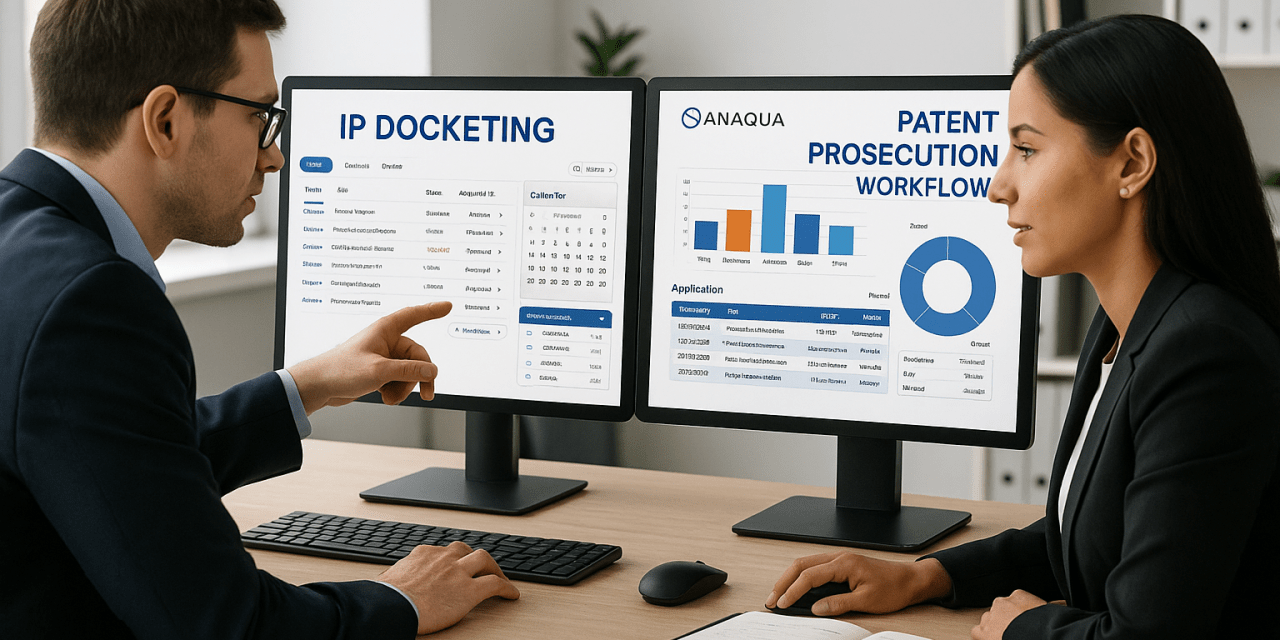
Introduction to Anaqua and IP Docketing Systems
Anaqua Integration is a core operations issue for law firms and IP teams that need accurate deadline control across prosecution workflows.
For authoritative filing basics, review the USPTO patent basics guide when mapping portfolio software to your patent workflow.
First, Anaqua is a comprehensive intellectual property management software widely used by law firms and in-house IP teams to manage patent and trademark portfolios. It offers tools for docketing, deadline management, and prosecution workflow automation tailored to the complex demands of IP practice. Integrating Anaqua with your existing IP docketing system enhances your ability to track critical deadlines accurately and streamline prosecution workflows.
Key Benefits of Integrating Anaqua with Your Docketing System
- Improved Deadline Accuracy: Automated syncing reduces manual entry errors and ensures consistent deadline updates across platforms.
- Streamlined Patent Prosecution Workflow: Integration enables seamless data flow between Anaqua and docketing systems, accelerating action item identification and response preparation.
- Centralized Data Management: Consolidates docketing details, correspondence, and patent prosecution history in one unified system for better visibility and reporting.
- Missed Deadline Prevention: Automated alerts and real-time updates help prevent costly deadline oversights.
- Enhanced Collaboration: Supports coordinated workflows between attorneys, docketing managers, and outsourced docketing teams.
Common Challenges in IP Docketing and How Integration Helps
Next, IP docketing teams face challenges such as data duplication, manual entry errors, inconsistent deadline tracking, and difficulty coordinating between internal and external teams. Integrating Anaqua with your docketing system addresses these issues by:
- Eliminating redundant data entry through automated synchronization.
- Standardizing deadline calculation methodologies across systems.
- Providing consolidated dashboards for real-time status updates.
- Facilitating secure data sharing with outsourced docketing providers.
Step-by-Step Guide to Integrating Anaqua with Existing Docketing Workflows
- Assess Current Systems and Needs: Evaluate your existing docketing platforms, Anaqua modules, and identify integration goals.
- Choose Integration Method: Decide between API-based integration, file imports/exports, or middleware depending on your systems’ capabilities.
- Map Data Fields: Align docketing fields such as case numbers, deadlines, and status codes between Anaqua and your docketing system.
- Develop and Test Integration: Work with IT or vendor support to build the integration and conduct thorough testing to ensure data accuracy.
- Train Staff: Provide training to docketing managers, paralegals, and attorneys on updated workflows and new features.
- Monitor and Optimize: Regularly review integration performance and address any discrepancies or workflow bottlenecks.
Integration Checklist
| Task | Status | Notes |
|---|---|---|
| Inventory current docketing tools and Anaqua modules | Pending/In Progress/Complete | |
| Identify integration objectives and scope | Pending/In Progress/Complete | |
| Map key docketing data fields | Pending/In Progress/Complete | |
| Develop/test integration in sandbox environment | Pending/In Progress/Complete | |
| Train docketing and prosecution teams | Pending/In Progress/Complete | |
| Launch integration and monitor performance | Pending/In Progress/Complete |
Best Practices for Maintaining Accuracy and Preventing Missed Deadlines
- Regular Data Audits: Schedule quarterly reviews to verify synchronization integrity between Anaqua and your docketing system.
- Standardized Procedures: Use uniform deadline calculation rules to avoid discrepancies.
- Automated Alerts: Configure notifications for critical deadlines and overdue actions.
- Backup and Recovery Plans: Maintain system backups and clear recovery protocols to prevent data loss.
- Continuous Training: Keep teams updated on system changes and best practices.
Leveraging Outsourced Docketing Support with Anaqua Integration
For example, Outsourced docketing providers can be integrated into your Anaqua workflow to offload routine docketing tasks while maintaining deadline accuracy. Integration enables:
- Secure, real-time data sharing between internal teams and outsourced providers.
- Automated status updates and deadline alerts visible to all stakeholders.
- Reduced risk of missed deadlines due to streamlined communication.
Also, For firms considering outsourced support, look for providers experienced with Anaqua integrations who offer transparent workflows and compliance with your firm’s procedures.
Case Studies: Successful Anaqua Integrations in Law Firms and In-House Teams
Meanwhile, Law Firm Example: A mid-sized IP law firm integrated Anaqua with their docketing system via API, cutting manual entry time by 40% and eliminating missed deadlines over a 12-month period. The integration allowed seamless case status updates and improved attorney access to prosecution documents.
In addition, In-House Team Example: A corporate IP department integrated Anaqua with an outsourced docketing provider’s system, achieving real-time deadline visibility and reducing data reconciliation efforts. This improved collaboration and allowed the IP team to focus on strategic prosecution activities.
Conclusion: Maximizing Efficiency and Accuracy with Anaqua Integration
However, Integrating Anaqua with your IP docketing system is a strategic investment that enhances accuracy, streamlines patent prosecution workflows, and significantly reduces the risk of missed deadlines. Whether managing docketing in-house or leveraging outsourced support, a well-planned integration provides centralized data management and real-time visibility critical for deadline-driven IP practices.
As a result, To ensure your Anaqua integration is optimized for flawless IP docketing accuracy, schedule a consultation with IP Docketers. Our expertise in IP docketing system integrations and legal operations will help you implement robust workflows that safeguard your deadlines and improve team productivity.
Related reading: Mastering Patent Prosecution with AI Office Actions Guide
Related reading: Preventing Missed Deadlines in IP Docketing
Related reading: Outsourced IP Docketing Support Services
Related reading: IP Docketing System Best Practices
Related reading: Legal Operations for Patent Prosecution Teams
This article is for informational purposes only and does not constitute legal advice.
FAQ
- What is Anaqua and how does it support IP docketing?
- Anaqua is an IP management platform that provides docketing, deadline management, and prosecution workflow automation designed to help law firms and in-house teams manage their patent and trademark portfolios efficiently.
- How does integrating Anaqua improve docketing accuracy?
- Integration reduces manual data entry errors by automating synchronization of deadline and case information between Anaqua and existing docketing systems, ensuring consistent and accurate tracking.
- Can Anaqua integrate with third-party docketing systems?
- Yes, Anaqua supports integration with various third-party docketing systems through APIs, file imports/exports, or middleware solutions depending on the systems involved.
- What are the common challenges when integrating Anaqua with existing workflows?
- Challenges include data field mapping complexities, system compatibility, change management, and ensuring consistent deadline calculation methodologies across platforms.
- How can outsourced docketing support leverage Anaqua integrations?
- Outsourced providers can connect to Anaqua-enabled workflows for real-time data sharing, deadline visibility, and coordinated updates, reducing risk and improving overall docketing reliability.
Practical Next Steps
At the same time, Map every active docketing system, identify where deadlines are entered or reviewed, and confirm which team owns the final QA check before critical prosecution dates.
Finally, Teams should also review escalation paths, audit reporting, manual override controls, and system integrations so operational risk is reduced before the next deadline spike.
First, law firms should compare their highest-risk deadlines with current staffing coverage so the most sensitive prosecution dates receive the strongest review process.
Next, docketing managers should document which tasks are fully automated and which still depend on manual review or exception handling across systems.



Leave A Reply
You must be logged in to post a comment.