Introduction: The Growing Importance of Patent Prosecution Paralegals
In the ever-evolving landscape of intellectual property (IP) prosecution, patent prosecution paralegals have emerged as vital contributors to the efficiency and accuracy of patent portfolio management. Their specialized skills in docketing, deadline management, and workflow coordination address the increasing complexity of patent prosecution for law firms and in-house IP teams alike.
For authoritative filing basics, review the USPTO patent basics guide when mapping portfolio software to your patent workflow.
Core Responsibilities of Patent Prosecution Paralegals
First, Patent prosecution paralegals serve as the operational backbone of IP prosecution support. Their core responsibilities include:
- Accurate Patent Docketing Management: Recording all critical deadlines and filings in docketing systems to ensure no actions are overlooked.
- Deadline Monitoring and Missed Deadline Prevention: Proactively tracking USPTO deadlines and client-specific timelines.
- Document Preparation and Filing Coordination: Assisting attorneys with the preparation of responses, amendments, and other prosecution documents.
- Communication Facilitation: Serving as a liaison between attorneys, clients, and external docketing vendors.
- Workflow Optimization: Managing task flows to align with prosecution strategies and client requirements.
For example, in a mid-sized law firm, paralegals often coordinate with docketing managers to cross-verify deadline entries and facilitate timely submissions, reducing risks of missed deadlines.
Enhancing IP Prosecution Support Through Expert Docketing and Deadline Management
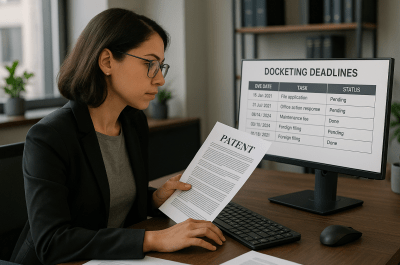
Next, Effective docketing underpins successful patent prosecution. Paralegals ensure that every USPTO notification, client instruction, and internal approval deadline is accurately logged and monitored.
For example, Consider a docketing manager at an in-house IP team who relies on paralegals to audit docket entries daily and reconcile discrepancies quickly. This collaboration minimizes the risk of overlooked office actions or missed responses.
Related reading: IP docketing best practices
Integration of Paralegal Services with Patent Prosecution Workflows
Also, Integration is key to seamless prosecution workflows. Patent prosecution paralegals work closely with attorneys, docketing managers, and legal operations professionals to coordinate filings, track prosecution stages, and update status reports.
Meanwhile, Workflow tools and docketing software facilitate real-time updates, enabling teams to adjust prosecution strategies proactively based on patent office communications.
Related reading: patent prosecution workflow optimization
Outsourcing Patent Prosecution Paralegal Services: Benefits and Considerations
In addition, Outsourcing patent prosecution paralegal services can offer scalable support, enhanced expertise, and cost efficiency. Law firms and corporations often partner with specialized vendors to supplement internal docketing and prosecution operations.
However, Benefits include access to experienced paralegals familiar with diverse docketing systems and USPTO procedures, flexible resourcing during peak periods, and reduced overhead.
However, considerations include data security, integration with existing systems, and maintaining communication channels for prompt updates.
Related reading: outsourced docketing support benefits
Preventing Missed Deadlines: Paralegal Best Practices
As a result, Missed deadlines can result in loss of patent rights and significant financial consequences. Patent prosecution paralegals employ several best practices to mitigate this risk:
| Best Practice | Description |
|---|---|
| Redundant Deadline Checks | Double verification of docket entries by paralegals and docketing managers. |
| Regular Status Audits | Weekly audits of pending deadlines and prosecution statuses. |
| Automated Alerts | Utilization of docketing system notifications for upcoming deadlines. |
| Clear Communication Protocols | Establishing direct lines between paralegals, attorneys, and vendors for urgent updates. |
| Comprehensive Training | Ongoing education on USPTO rules and docketing system capabilities. |
Related reading: missed deadline prevention strategies
Technology and Tools Supporting Patent Prosecution Paralegals
At the same time, Modern docketing platforms, such as CPA Global, Anaqua, and FoundationIP, provide robust tools that streamline patent prosecution paralegal tasks:
- Deadline Automation: Automatic calculation of USPTO deadlines based on filing dates.
- Document Management: Centralized repositories for prosecution correspondence and filings.
- Task Management: Workflow dashboards to assign and track prosecution tasks.
- Integration Capabilities: APIs connecting docketing data with billing, CRM, and patent analytics systems.
Leveraging these tools reduces manual errors and enhances collaboration across IP teams.
Conclusion: Leveraging Paralegal Expertise to Optimize Patent Prosecution
Finally, Patent prosecution paralegals are indispensable to effective IP prosecution support. Their expertise in docketing accuracy, deadline management, and workflow integration directly contributes to safeguarding patent rights and streamlining prosecution processes.
First, Law firms, docketing managers, and in-house IP teams can optimize their patent prosecution operations by investing in skilled paralegal support, utilizing advanced docketing technology, and considering outsourced services when appropriate.
Next, Contact IP Docketers today for expert consultations on optimizing your patent prosecution paralegal support and docketing operations to safeguard against missed deadlines.
This article is for informational purposes only and does not constitute legal advice.
Frequently Asked Questions
What is the role of a patent prosecution paralegal in IP prosecution?
For example, A patent prosecution paralegal manages docketing, deadlines, document preparation, and communication within the patent prosecution process to ensure smooth workflow and compliance with USPTO requirements.
How do patent prosecution paralegals help prevent missed deadlines?
Also, They implement redundant deadline checks, monitor docketing systems, use automated alerts, and facilitate clear communication between attorneys and docketing managers to avoid any lapse in prosecution timelines.
Can law firms outsource patent prosecution paralegal services?
Meanwhile, Yes, outsourcing provides flexible, expert support to supplement internal teams, especially beneficial during peak workloads or for specialized docketing requirements.
What software tools support patent prosecution paralegal workflows?
In addition, Common tools include CPA Global, Anaqua, FoundationIP, and custom docketing platforms offering deadline automation, document management, and workflow tracking features.
How does a paralegal integrate with prosecution teams and docketing managers?
However, Paralegals coordinate closely with attorneys and docketing managers through shared docketing platforms, routine status meetings, and communication protocols to ensure accurate deadlines and seamless prosecution workflow.
Practical Next Steps
As a result, Map every active docketing system, identify where deadlines are entered or reviewed, and confirm which team owns the final QA check before critical prosecution dates.
At the same time, Teams should also review escalation paths, audit reporting, manual override controls, and system integrations so operational risk is reduced before the next deadline spike.
First, law firms should compare their highest-risk deadlines with current staffing coverage so the most sensitive prosecution dates receive the strongest review process.
Next, docketing managers should document which tasks are fully automated and which still depend on manual review or exception handling across systems.
For example, a team using multiple docketing platforms may need a single weekly reconciliation step so duplicate records and missing updates are found early.
Meanwhile, firms should confirm who owns escalation when filings, office actions, or client instructions arrive close to a deadline.
In addition, IP teams should review integration gaps between docketing tools, email workflows, shared drives, and reporting dashboards.
However, adding more software without improving QA controls can still leave deadline risk in place if ownership is unclear.
As a result, many firms pair system improvements with outsourced support, documented SOPs, and regular audit reviews to keep workflows reliable.