Patent Prosecution Workflows: Introduction to Patent Prosecution and Patentability Concerns
Patent prosecution is a critical process involving the preparation, filing, and negotiation of patent applications with patent offices to secure enforceable intellectual property rights. Throughout prosecution, legal concerns over patentability—such as novelty, non-obviousness, and subject matter eligibility—require vigilant management to avoid costly rejections or invalidations. For law firms, in-house IP teams, docketing managers, and prosecution specialists, maintaining precise workflows that address these concerns is essential to reduce risk and ensure compliance.
For authoritative filing basics, review the USPTO patent basics guide when mapping portfolio software to your patent workflow.
Common Legal Challenges in Patentability During Prosecution
First, During patent prosecution, several legal challenges arise related to patentability, including:
- Novelty Objections: Ensuring the claimed invention is new compared to prior art.
- Obviousness Rejections: Demonstrating inventive step beyond what is obvious to a person skilled in the art.
- Subject Matter Eligibility: Avoiding claims directed to abstract ideas, laws of nature, or natural phenomena.
- Specification Adequacy: Providing sufficient written description and enablement to support claims.
- Procedural Compliance: Meeting formal requirements and deadlines to prevent abandonment.
Next, Failure to address these challenges proactively can lead to office action rejections, appeals, or loss of patent rights, highlighting the need for robust prosecution workflows integrated with legal strategy.
Integrating Docketing Systems to Safeguard Deadlines and Compliance
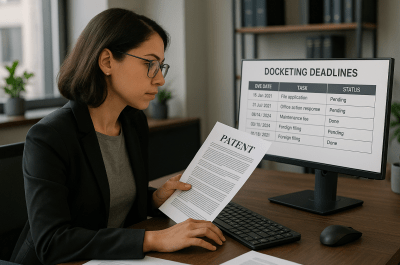
For example, Accurate docketing systems are the backbone of effective patent prosecution management. Integration of docketing platforms with patent office data streams and internal workflows enables:
- Automated Deadline Tracking: Real-time monitoring of response due dates and maintenance fees.
- Compliance Alerts: Early notifications for upcoming deadlines or procedural requirements.
- Document Management: Centralized access to filings, office actions, and correspondence.
Also, For docketing managers, synchronizing these systems with prosecution teams ensures all stakeholders remain aware of critical timelines and legal developments, thereby minimizing the risk of missed deadlines and procedural errors.
Best Practices for Streamlining Patent Prosecution Workflows
Meanwhile, Implementing best practices in patent prosecution workflows improves efficiency and legal outcomes. Recommended strategies include:
| Best Practice | Benefit | Example Application |
|---|---|---|
| Standardizing Workflow Steps | Ensures consistency and reduces errors | Using checklist templates for office action responses |
| Integrating Docketing with Prosecution Tools | Improves deadline visibility and compliance | Linking docketing system alerts to prosecution case files |
| Regular Training for IP Teams | Keeps teams updated on patent law and system capabilities | Quarterly workshops on patentability trends and docketing updates |
| Implementing Quality Control Checks | Reduces risk of overlooked patentability issues | Peer review of claim amendments before filing |
In addition, These practices support docketing managers and prosecution teams in maintaining high accuracy and responsiveness throughout the prosecution lifecycle.
Leveraging Outsourced Docketing Support for Enhanced Accuracy
However, Outsourcing patent docketing functions can offer law firms and in-house IP departments specialized expertise, scalability, and cost efficiencies. Trusted docketing service providers bring:
- Dedicated teams focused on deadline accuracy and procedural compliance.
- Advanced docketing software integrations and custom reporting.
- Capacity to handle fluctuating workload volumes without compromising quality.
As a result, Outsourcing is particularly advantageous when internal resources are limited or when firms seek to reduce missed deadline risks while maintaining focus on core prosecution activities. Related reading: outsourced docketing services
Role of IP Paralegals in Managing Patentability Issues and Workflow Efficiency
At the same time, IP paralegals play a pivotal role in supporting prosecution teams by ensuring workflows address patentability concerns effectively. Their responsibilities often include:
- Maintaining docket accuracy and updating prosecution records promptly.
- Coordinating document preparation and filing with patent counsel.
- Tracking office actions and assisting in drafting responses.
- Communicating with patent offices and external vendors.
Finally, Well-trained paralegals enhance workflow efficiency and act as a critical control point for early identification of patentability risks and deadline management. Related reading: IP paralegal operations
Case Studies: Preventing Missed Deadlines and Addressing Patentability Risks
First, Case Study 1: Law Firm Avoids Abandonment Through Integrated Docketing
A mid-sized law firm integrated its docketing system with prosecution case management software. This synchronization generated automated alerts for all patent office deadlines. As a result, the firm prevented several near-miss deadlines, preserving valuable patent rights for clients.
Next, Case Study 2: In-House IP Team Streamlines Patentability Review
An in-house IP department implemented standardized checklists and paralegal-led quality control reviews focusing on patentability issues. These measures reduced office action rejections related to inadequate claim support by 30% over 12 months. Related reading: patent prosecution workflow integration
Conclusion: Strengthening Patent Prosecution with Proactive Workflow Management
For example, Optimizing patent prosecution workflows to address legal concerns over patentability is essential for law firms and in-house IP teams committed to protecting innovation and minimizing risk. Integrating advanced docketing systems, adopting best practices, leveraging outsourced support, and empowering IP paralegals collectively improve accuracy, compliance, and efficiency.
Also, Contact IP Docketers today to schedule a consultation on optimizing your patent prosecution workflow and mitigating legal risks related to patentability. Related reading: IP docketing best practices
FAQ
What are the primary legal concerns related to patentability during prosecution?
Primary concerns include novelty, obviousness, subject matter eligibility, specification adequacy, and procedural compliance. Addressing these ensures claims meet patentability standards.
How can docketing systems help prevent missed deadlines in patent prosecution?
Docketing systems automate tracking of response deadlines, provide alerts, and centralize document management, greatly reducing the risk of missed deadlines and procedural errors.
What best practices improve patent prosecution workflow efficiency?
Standardizing workflow steps, integrating docketing with prosecution tools, regular team training, and implementing quality control checks enhance efficiency and accuracy.
When should law firms consider outsourcing their patent docketing support?
Outsourcing is beneficial when internal resources are limited, workload fluctuates, or when firms aim to reduce missed deadline risks while maintaining prosecution focus.
How do IP paralegals contribute to managing patentability issues?
IP paralegals maintain docket accuracy, coordinate filings, track office actions, and assist counsel—ensuring workflows address patentability concerns and deadlines effectively.
This article is for informational purposes only and does not constitute legal advice.
Practical Next Steps
Meanwhile, Map every active docketing system, identify where deadlines are entered or reviewed, and confirm which team owns the final QA check before critical prosecution dates.
In addition, Teams should also review escalation paths, audit reporting, manual override controls, and system integrations so operational risk is reduced before the next deadline spike.
First, law firms should compare their highest-risk deadlines with current staffing coverage so the most sensitive prosecution dates receive the strongest review process.
Next, docketing managers should document which tasks are fully automated and which still depend on manual review or exception handling across systems.
For example, a team using multiple docketing platforms may need a single weekly reconciliation step so duplicate records and missing updates are found early.